A simple, detailed, and slightly funny introduction to the roaring game—from 42-pound stones and sweeping to accessibility, bonspiels, and the Spirit of Curling.
Curling with Piper: Junior curling can be a fun league, new friends, bonspiels, or a competitive team—start wherever you are. Meet Piper’s Junior Curling guide.
Curling is a team sport played on a long sheet of ice. Players slide 42-pound granite stones toward a circular target while teammates sweep, judge speed, and plan what should happen next.
The short version: finish closer to the center than the other team. The interesting version: every stone changes the puzzle.
The one-sentence version: Slide the stone, sweep the ice, work together, and finish closer to the middle.
2
The Sheet
The long lane of specially prepared curling ice is called a sheet. A target sits at each end so play can travel back and forth.
Thin lines cross the ice. The most important ones for a beginner are the hog lines, which a delivered stone normally must cross to stay in play, and the tee line, which runs through the middle of the target.
Part
What it tells you
Hog line
A delivered stone normally must completely cross the far one to remain in play.
Tee line
Runs through the center of the house.
Back line
A stone that passes completely beyond it is out of play.
Hack
The foothold a player pushes from during a traditional delivery.
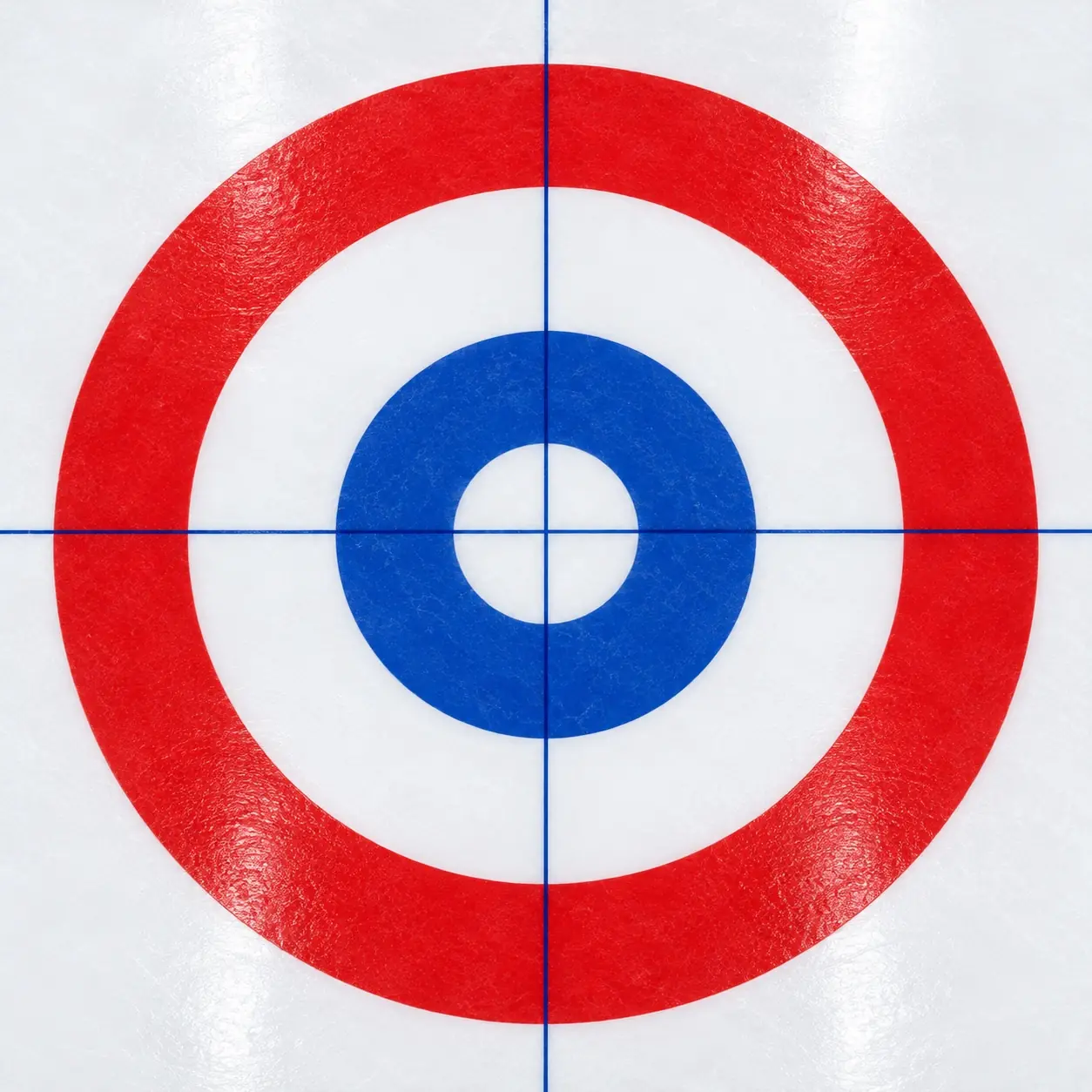
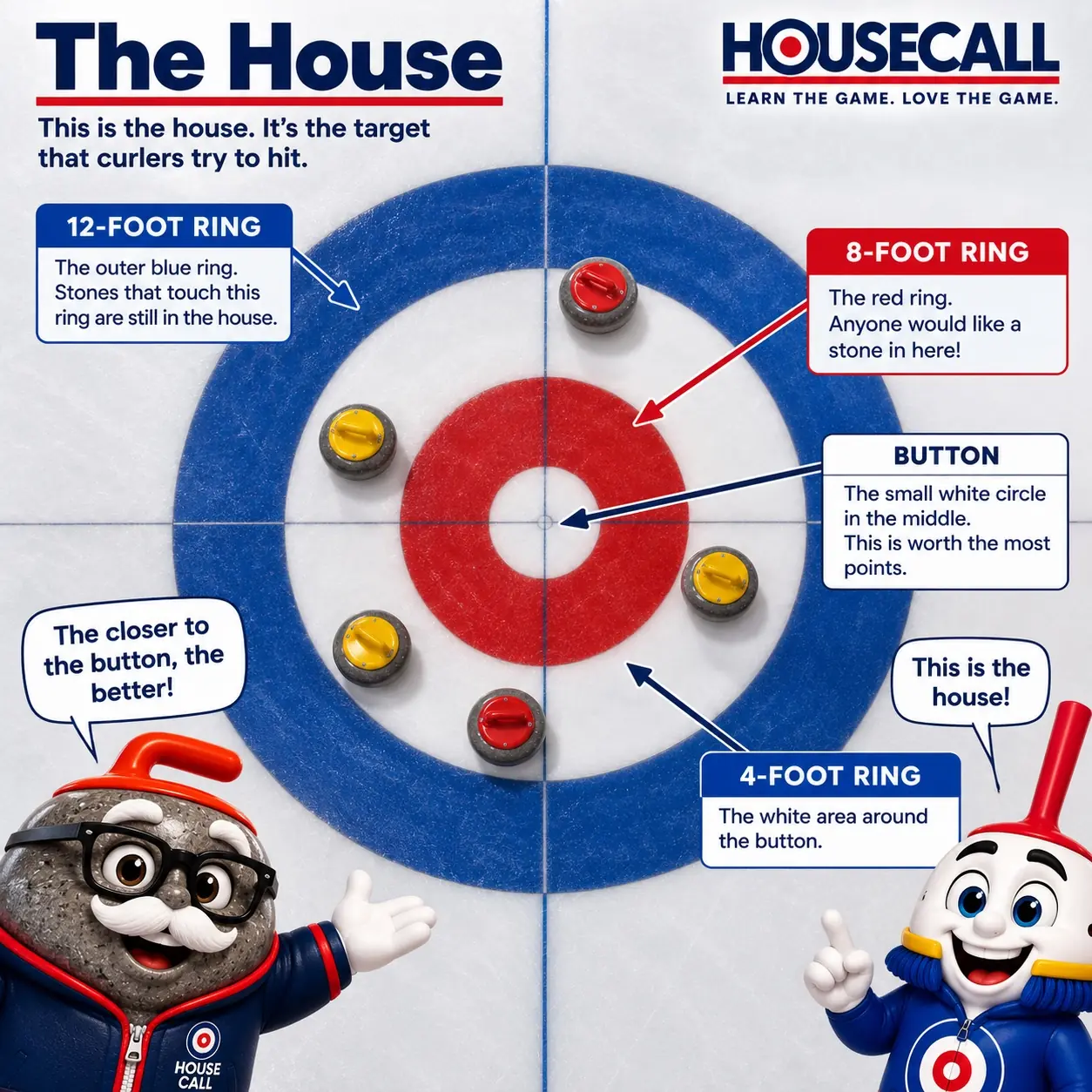
The large target at each end is called the house. Its colored rings help players judge position, but they do not have different point values.
The button is the middle
The small circle at the center is called the button. When an end is finished, distance from the button determines who scores.
A stone only needs to touch the house to be capable of scoring.
4
The Rocks
The 42-pound granite objects are officially called stones, although curlers call them rocks too. A handle allows the player to give the stone a gentle rotation at release.
That slow turn makes the stone curve—or curl—as it travels. Players do not lift and throw the stones. They slide them along the ice.
Useful fact: A traditional end includes 16 delivered stones. That is 672 pounds of granite moving down the sheet before anyone receives a point.
5
The Teams
Traditional curling has two teams of four. The teams alternate shots. Each player delivers two stones, so each team plays eight stones per end.
Everyone contributes. A player may deliver, sweep, judge the stone’s speed, hold the broom as a target, call the shot, or help discuss strategy.
6
Player Positions
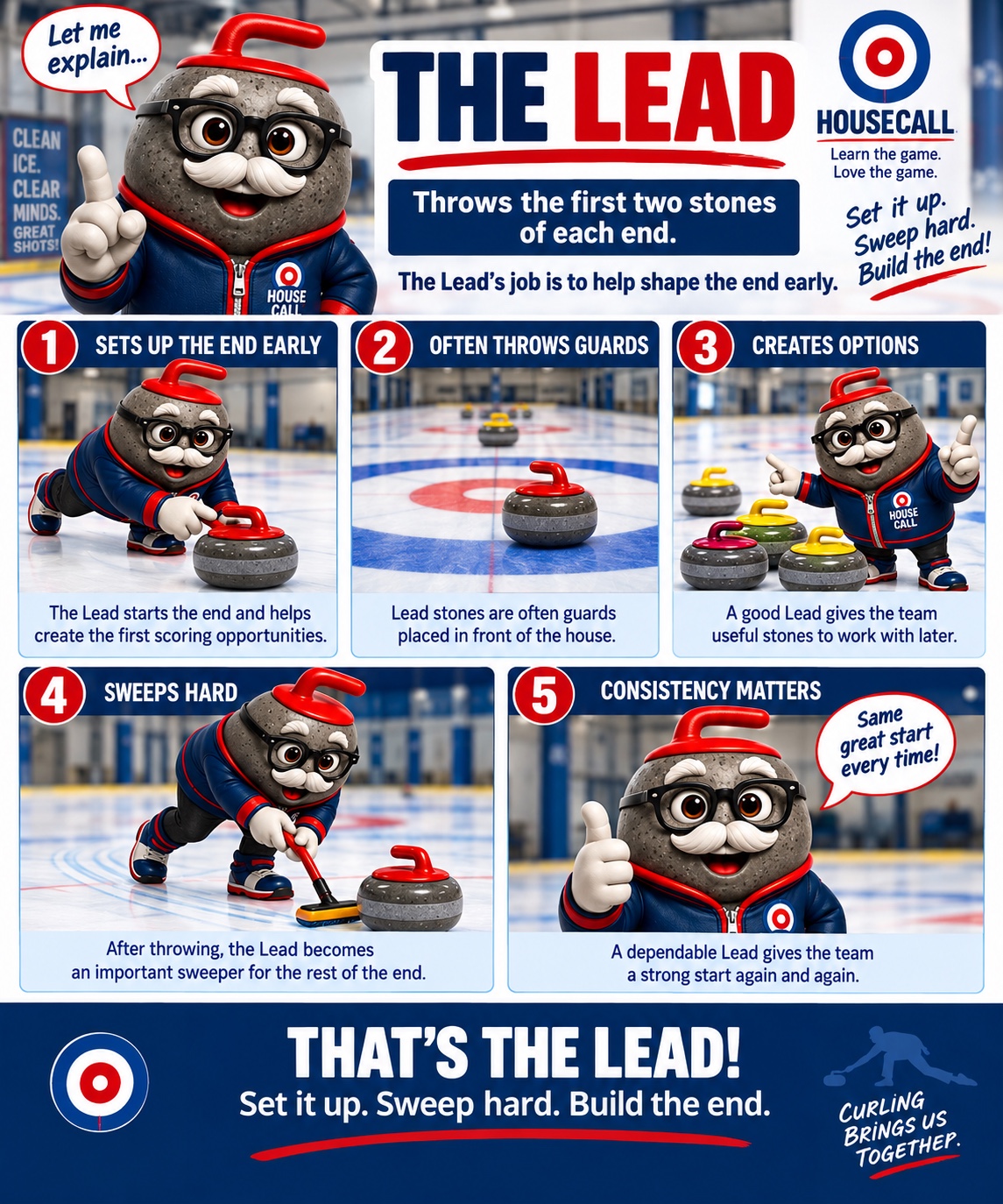
Lead
Throws the first two stones and usually sweeps six teammate stones.
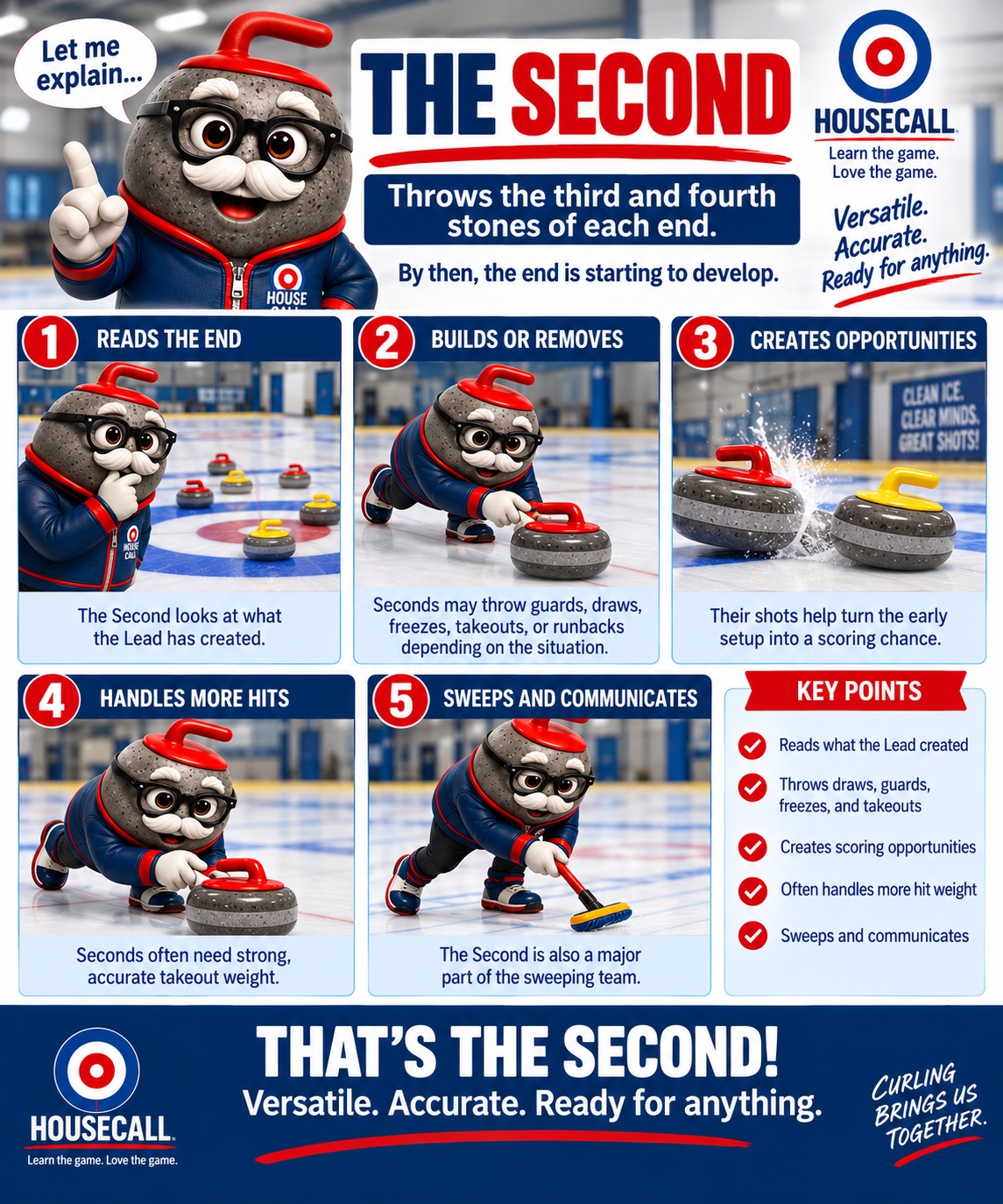
Second
Throws third and fourth, often playing a mix of draws and takeouts.
Third
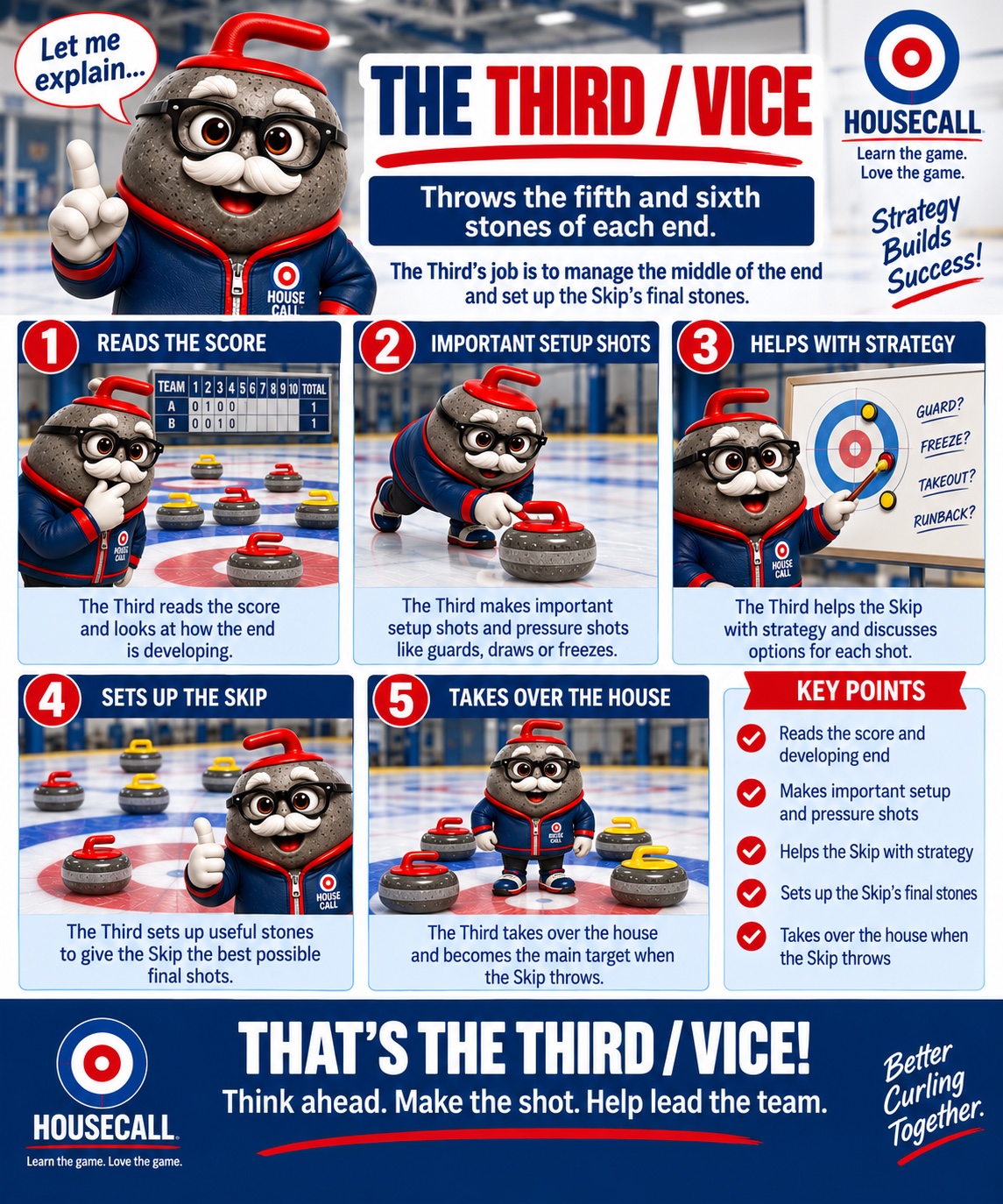
Throws fifth and sixth, helps with strategy, and usually confirms the score.
Skip
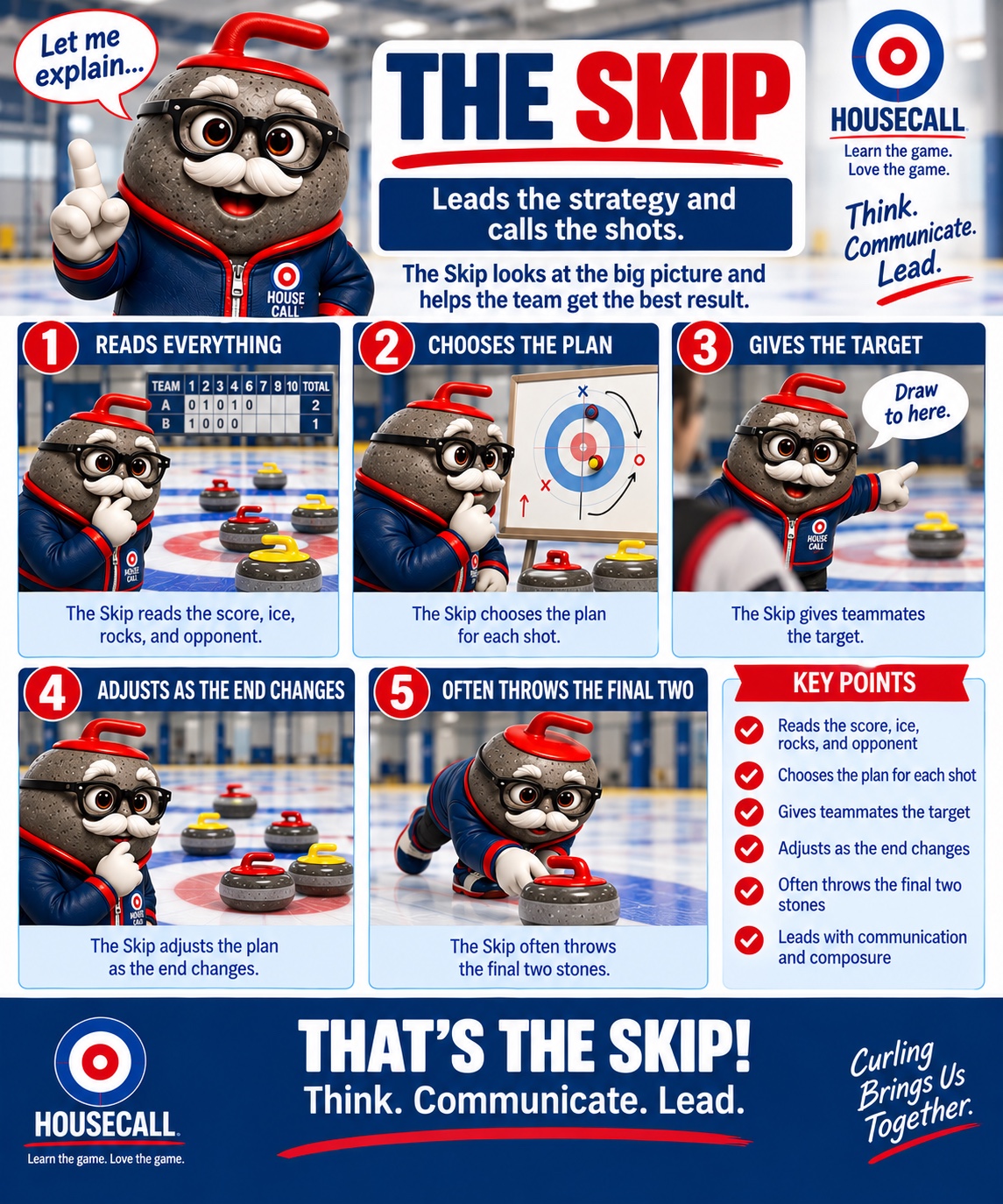
Directs strategy, holds the target broom, and often throws the final two stones.
Teams may arrange throwing order differently, but the four position names remain useful.
7
How a Shot Works
The skip chooses the shot and holds the broom where the player should aim.
The player delivers the stone with the planned direction, speed, and gentle rotation.
The sweepers judge speed while the skip watches the path.
The team communicates until the stone stops.
Curlers call speed weight. A “draw weight” stone is meant to stop in play. A “takeout weight” stone travels faster so it can hit another stone.
Sweep works on the stone while Granite watches its path. Curling is one shot—but many jobs happening together.
8
Sweeping
Curling ice is covered with frozen droplets called pebble. Sweeping warms and smooths the very top of that pebble for a moment.
Good sweeping can help a stone travel farther, stay straighter, and curl less. It influences the shot; it does not let players steer the stone anywhere they want.
After all 16 stones are played, look for the stone closest to the button. That team scores.
It earns one point for every stone closer to the button than the opponent’s closest stone. Only one team can score in an end.
Start with the stone closest to the button. Every stone from that same team that is closer than the opponent’s nearest stone adds one point. The rings themselves are not worth different amounts.
Example: Red has the two closest stones. Blue’s best stone is third closest. Red scores two points.
If no stones are touching the house, the end is blank and nobody scores.
10
Ends
A round of curling is called an end. Teams alternate deliveries until all stones have been played, then the score is recorded and play moves in the opposite direction.
Many recreational games last eight ends. Major competitive games are often ten ends. The team with the most points after the final end wins.
The team throwing the final stone of an end has the hammer. Last rock is valuable because it gives that team the final chance to score, remove danger, or repair a messy situation.
If the hammer team scores, hammer normally moves to the other team in the next end. If the end is blank, the hammer team normally keeps it.
Why would a team blank an end? A team with hammer usually hopes to score two or more points. If it looks like only one point is available, the team may choose to remove every stone from the house so nobody scores. That lets it keep hammer and try for a better scoring chance in the next end. Teams do not always blank—late in a game, taking one point may be more important than waiting.
12
Basic Strategy
Teams do not simply aim every stone at the button. Early shots create options; later shots use or remove them.
Draw
A stone meant to stop in the house or another chosen spot.
Guard
A stone in front of the house that protects something behind it.
Teams with hammer usually want room to score more than one. Teams without hammer often try to make the end difficult and force the opponent to score only one.
Quick glossary
Curling Terms You Will Hear
Beginner terms
WHICH STONES ARE OURS?
Sweep: “Granite, there are sixteen stones. How do I know which eight are ours?”
Granite: “Look at the handles. Each team uses one handle color for the whole game.”
At World Curling events, the colors are red and yellow. Your club may use different colors, but the idea stays the same: follow your team’s handle color.
Sweep: “So curling has color-coded rocks?”
Granite: “Sometimes the simplest answer is the right one.”
Begin and end with a handshake or friendly greeting. Stay still and quiet during an opponent’s delivery. Keep the ice clean. Be ready when it is your turn. Compliment good shots, including the other team’s.
Curling is competitive, but it expects honesty. If you break a rule—even when nobody else noticed—you say so.
15
What Happens at a Curling Club
For a learn-to-curl, wear clean, comfortable shoes and warm layers that let you move. Clubs usually provide stones, brooms, sliders, grippers, and instruction.
You will learn how to walk safely, deliver or use a stick, sweep, score, and play a short game. Many clubs can place beginners in leagues even if they do not arrive with a team.
After the game: Teams often sit together, talk, and share a drink or snack. Curlers call this broomstacking. The club room is part of the experience.