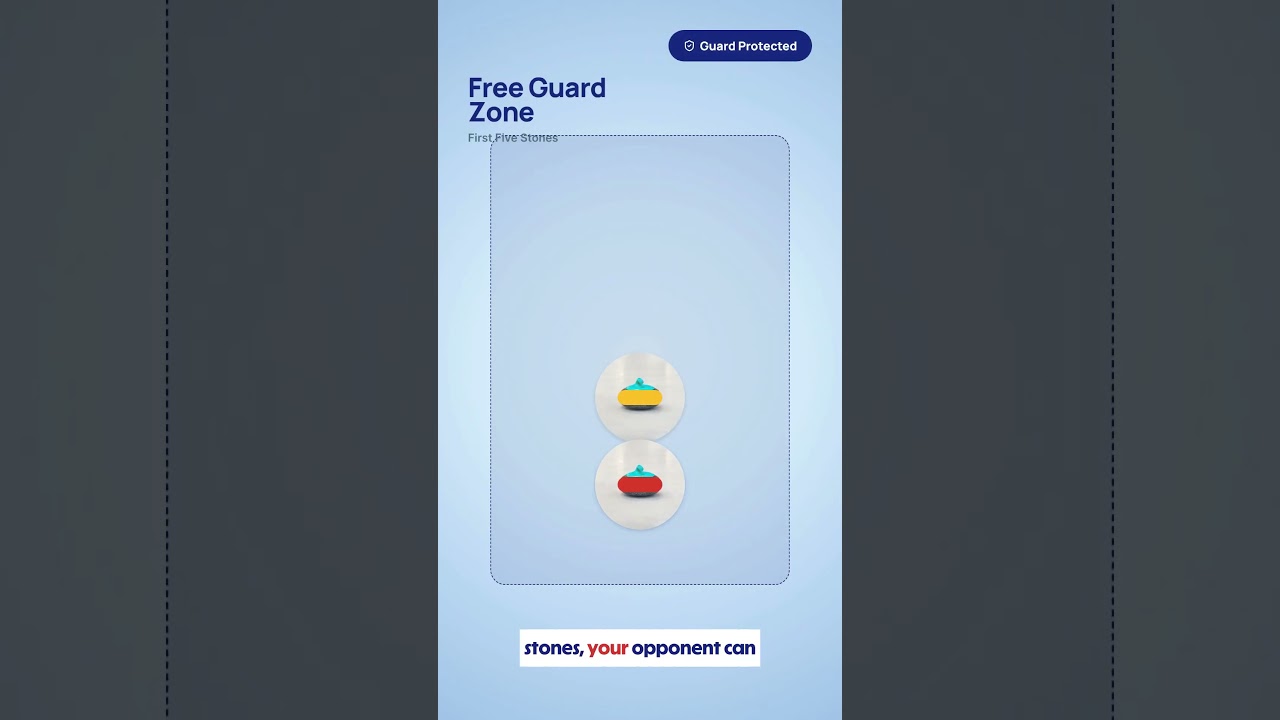
A guard is a stone in front of the house. If it belongs to the other team and is in the free guard zone, you cannot knock it out of play during the first five delivered stones of the end.
You may move it, and you may play around it. You just cannot remove it from play until the sixth stone of the end.
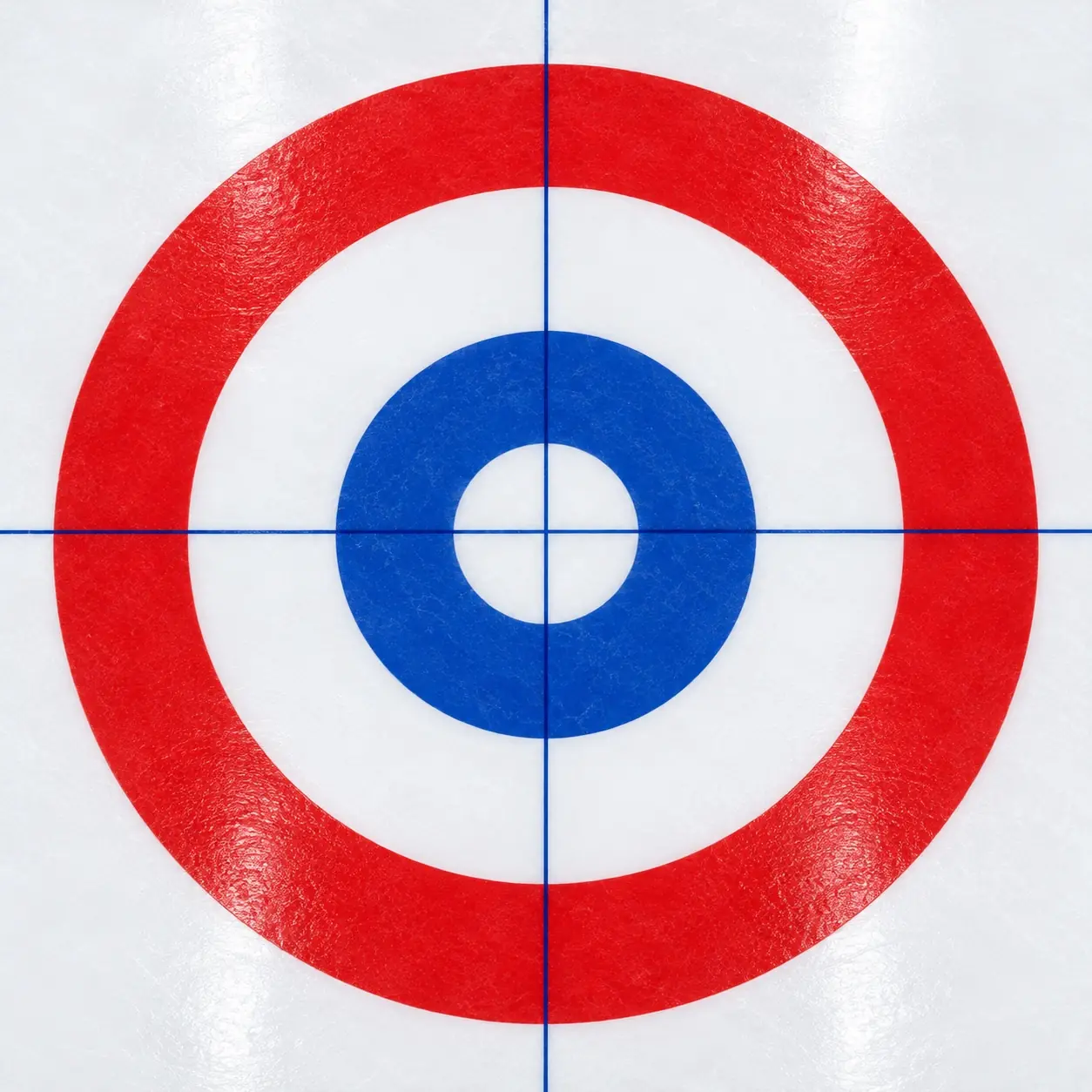
The house is the scoring target. The free guard zone is the open ice directly in front of the house, between the hog line and the tee line, not including the house itself.
Why the rule exists: It keeps early guards available, which creates more strategy and makes it harder to clear every stone away immediately.
Honesty matters
Burned Stones
A stone is “burned” when a player, broom, clothing, or equipment touches it while it is moving. Call it immediately. Do not hope nobody noticed.
Behind the tee line is at the playing end, inside the far hog line. Under World Curling Rule R9(b), you do not grab the touched stone or stop the other moving stones. Let the whole shot finish first. Then use this guide.
A moving stone is touched behind the tee lineThis includes contact from a hand, broom, clothing, or equipment.
Say it immediately—then let every stone come to rest.
Who touched the moving stone?
Your team touched its own stone
The other team chooses one of three fair results:
Remove the touched stone and replace stones moved after the touch.
Leave every stone where it stopped.
Place the affected stones where they reasonably would have stopped without the touch.
The other team touched your stone
Your team—the team that did not cause the touch—places the affected stones where it reasonably believes they would have stopped.
Something outside either team caused it
The teams place the stones where they would have stopped. If they cannot agree, the stone may be redelivered after displaced stones are replaced. If those original positions cannot be agreed, the end is replayed.
Easy memory: Call it. Let everything stop. The team that did not cause the touch gets the protection.
One useful distinction: touching a stone is a burned-stone rule. Sweeping illegally behind the tee line without touching the stone is a separate sweeping violation. In that case, the non-offending team may allow the play to stand or place the stone—and any stones it would have affected—where they likely would have finished.
The beginner habit: Say “I burned it” right away and let the skips or an official apply the remedy. Club leagues may use local rules, so ask before moving anything.
Your team may sweep its own delivered stone as it travels. Sweeping can help it go farther and stay straighter.
Behind the tee line at the playing end, either team may sweep a moving stone. Only one player from each team may sweep there at a time. The non-delivering team may try to sweep an opponent’s stone farther through the house.
Sweepers must not touch the stone, leave debris, or deliberately damage the ice.
A line through the button
Sweeping Behind the Tee Line
The tee line runs through the center of the house. Once a moving stone crosses it, one player from each team may sweep it.
That is why you sometimes see an opponent suddenly begin sweeping a stone near the back of the house: they are trying to carry it farther, perhaps completely out of scoring position.
Delivery lines
Hog Line
The player must release the handle before the stone reaches the near hog line. At the other end, the delivered stone normally must completely cross the far hog line to remain in play.
There is an exception when the delivered stone hits another stone that was already in play before crossing the far hog line.
Short stone? If it stops before fully crossing the far hog line without making that contact, it is removed.
Out of play
Out-of-Bounds Stones
A stone is removed when it touches a sideline or side barrier, or when it travels completely beyond the back line. A stone that rebounds from an out-of-play area does not return to the game.
Players should wait until a stone has fully stopped before clearing it unless it is obviously leaving play and doing so is safe.
Too close to call
Measuring
Do not move stones in the house until both teams agree on the score. If nobody can tell which stone is closer, use the measuring device.
The thirds or vice-skips usually handle scoring and measuring. Everyone else gives them room and resists the urge to lean over the house offering increasingly confident guesses.
Last rock advantage
Hammer
The team throwing the last stone in an end has the hammer. It is an advantage because that team gets the final chance to change the score.
When the hammer team scores, the other team normally gets hammer next. When an end is blank—no score—the same team normally keeps hammer.
The rule behind the rules
Spirit of Curling
Curlers play to win, but never by cheating. They call their own violations, avoid distracting opponents, compliment good shots, and accept the final result with respect.
No celebration when an opponent misses—even internally. The miss is not yours to cheer. Your own good shot is.
A true curler would rather lose than win unfairly.