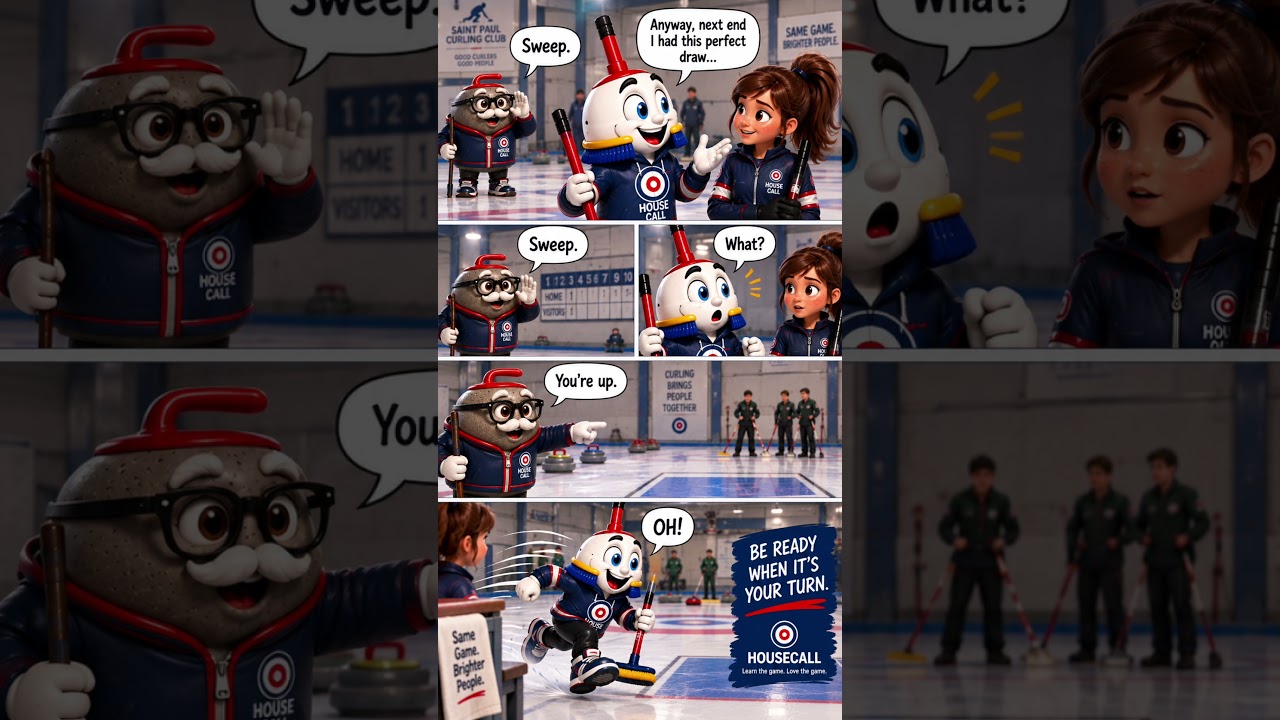
Start with a handshake
Greet the other team and wish them a good game.

Inside the club
Curling is competition, but it is also handshakes, honesty, volunteers, shared tables, old stories, new friends, and deep respect for the ice.
The big idea
Curlers try to outthink, outshoot, and remove one another’s stones. Then they shake hands, sit together, and talk about the game. That balance is the heart of curling culture.
“The goal is not only to play a good game. It is to make sure everyone can enjoy it.”

Curling etiquette
Etiquette is not about being stiff or formal. It keeps the game fair, comfortable, and moving.
Greet the other team and wish them a good game.
Know when you throw and have your equipment ready.
Stay still, quiet, and out of the line of sight during delivery.
That includes shots made by the other team.
Celebrate your play, not another player’s mistake.
Shake hands again when the game is over.
The Spirit of Curling
Curling has traditionally depended on players to be honest about their own actions. If you touch a moving stone, move a stationary stone, or break a rule, you call it—even if nobody else noticed.
The Spirit is not about being less competitive. It is about understanding that a fair game matters more than an unfair win.
See the rule explainerClub traditions
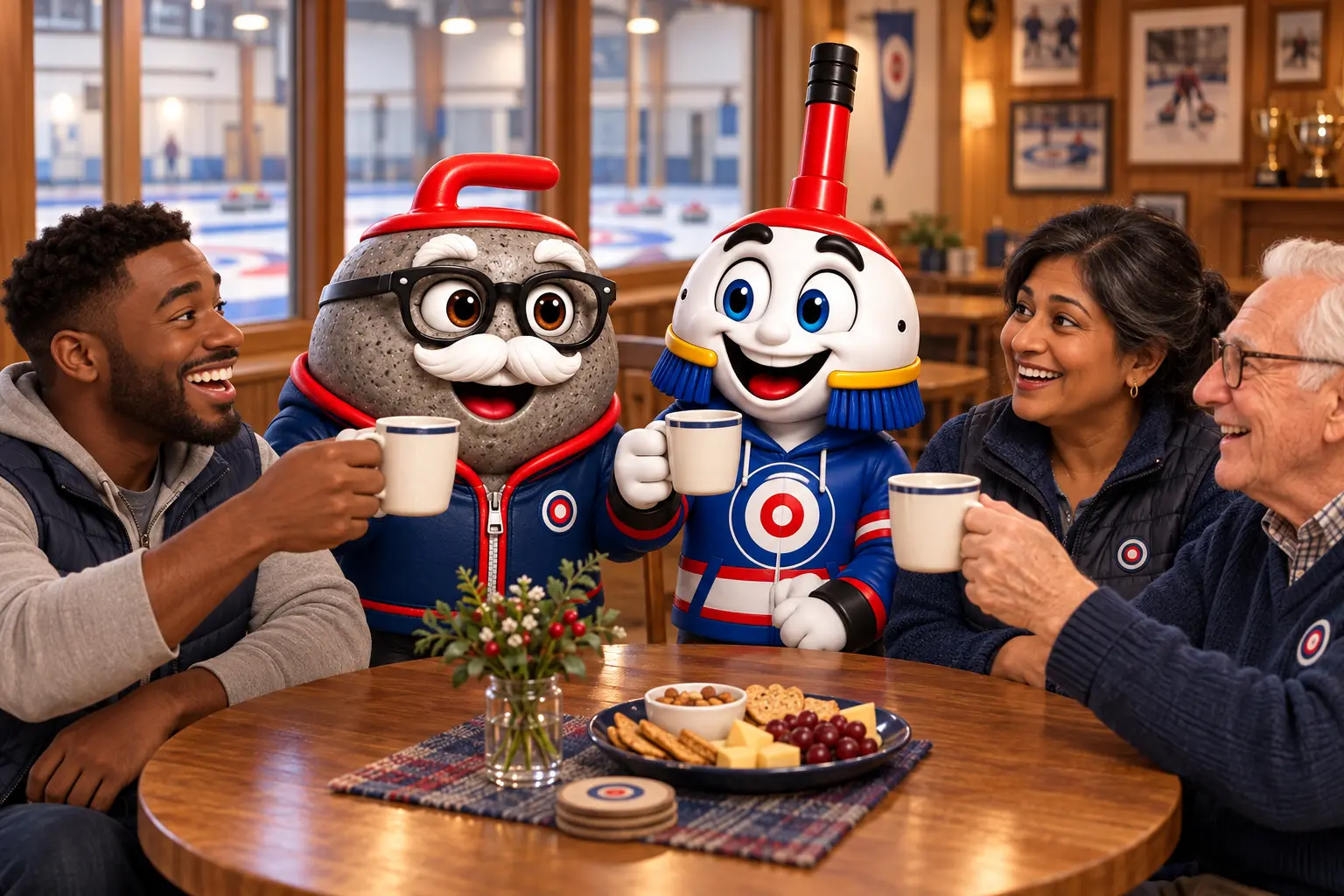
After a game, both teams often sit together for conversation, a drink, or a snack. Traditionally, the winning team buys the first round, though customs vary.
Watch Broomstacking →A curling tournament is a bonspiel. Some are fiercely competitive; others include costumes, food, music, and teams focused heavily on Saturday night.
Leagues, juniors, practice, ice-making, volunteering, meals, maintenance, and long friendships all share the same building.
Watch: Mention Curling Near a Curler →
Watch: Tuesday Night League Is the Olympics →
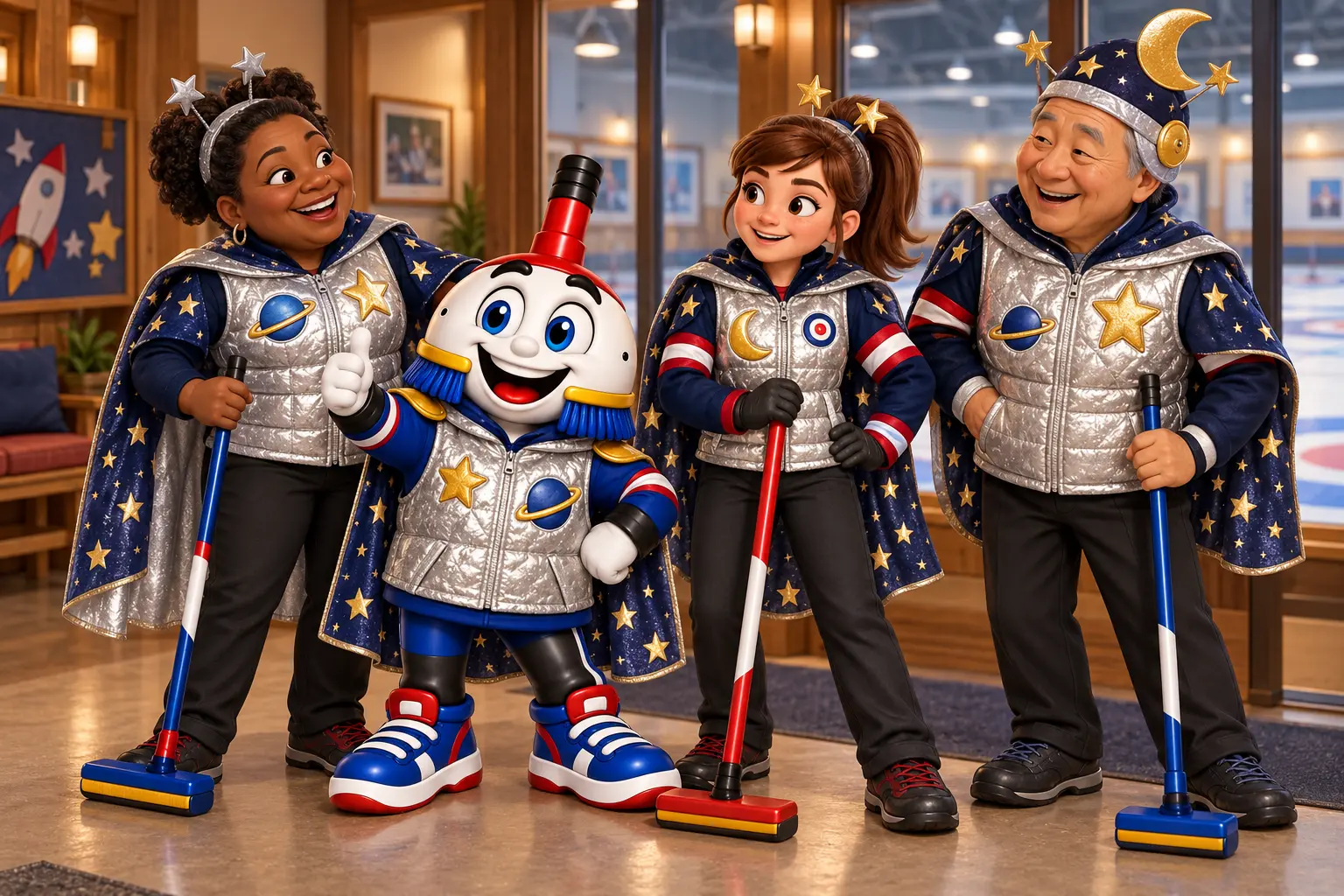

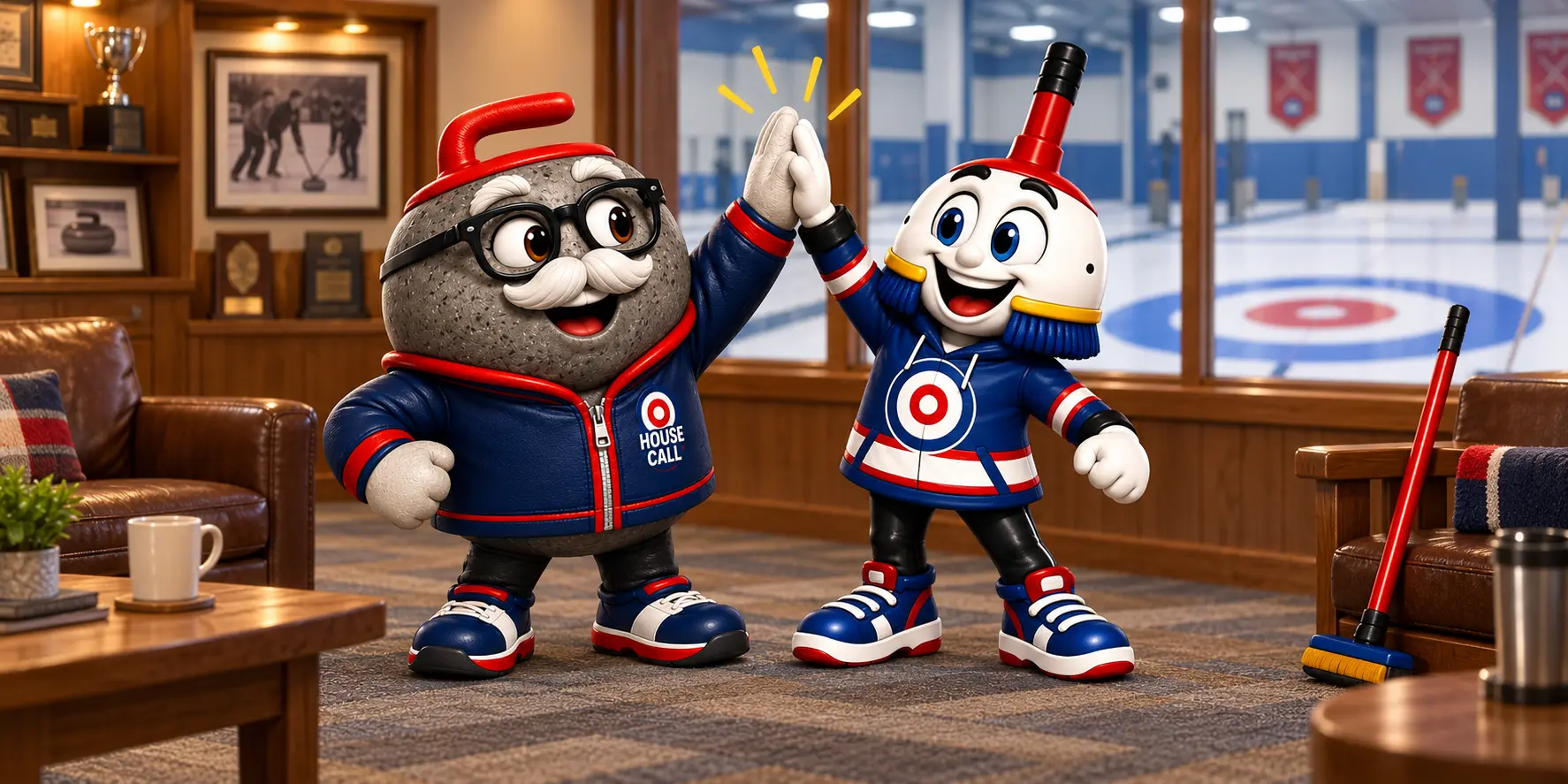
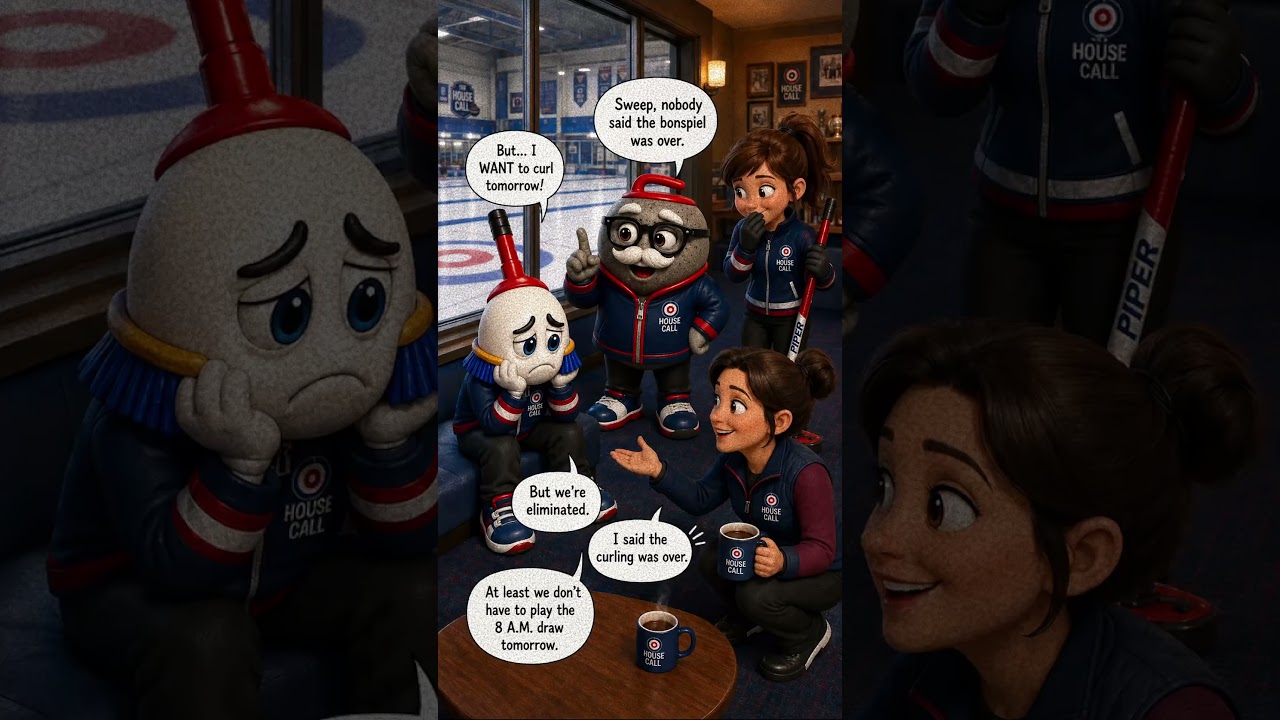
Sweep: “The snacks.”
Granite: “The people, Sweep.”
Sweep: “Right. The people. And the snacks.”
More curling culture
Short HouseCall stories about the people, traditions, and moments that make curling feel like home.
Respect for the ice
A tiny hair or piece of dirt can make a stone suddenly change direction. Curlers protect the playing surface by wearing clean shoes, keeping equipment clean, avoiding food and drinks on the ice, and repairing damage properly.
The icemaker has spent hours preparing the sheet. Treating the ice well is a way of respecting everyone who will play on it.
Finding community
Clubs can often place new players in instructional leagues, social leagues, open houses, or substitute lists. Many curling friendships begin with four people who had never met.