Piper’s corner of the club

Junior Curling, From My Point of View

I’m Piper. I’m 15, I curl, and I’m still figuring out how far I want to take this game. That is kind of the fun part.

Start with junior curling
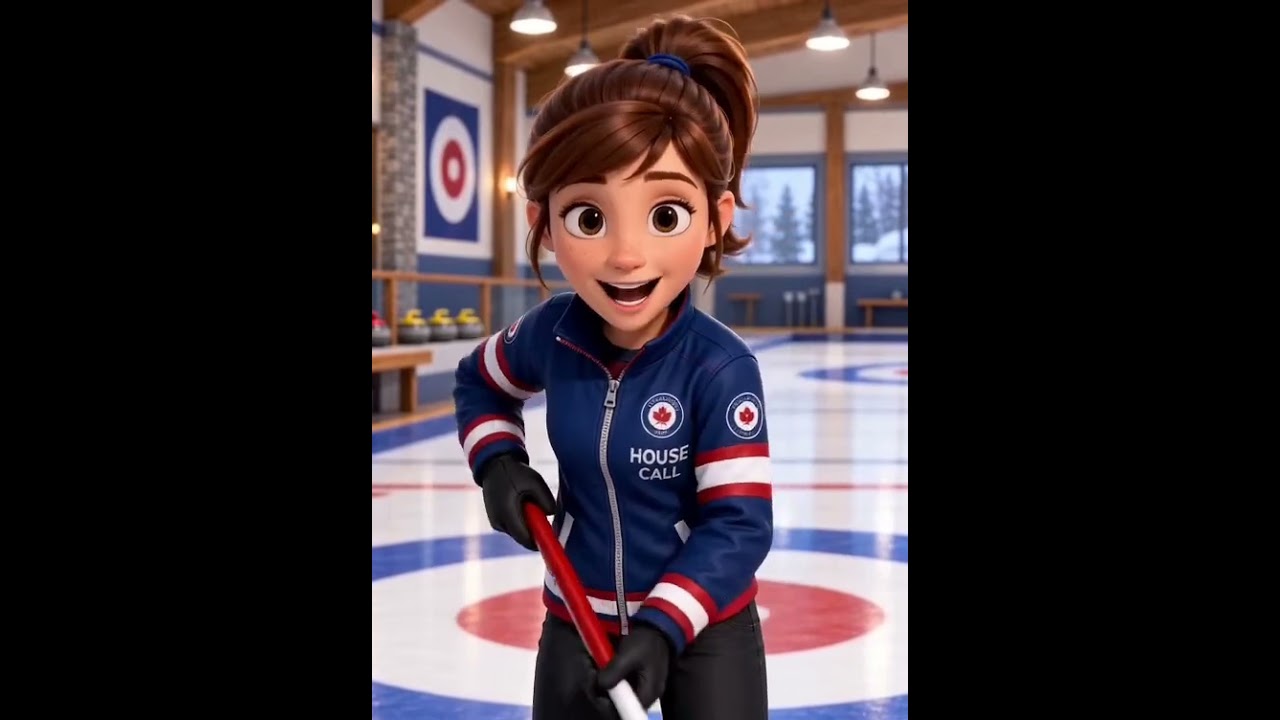
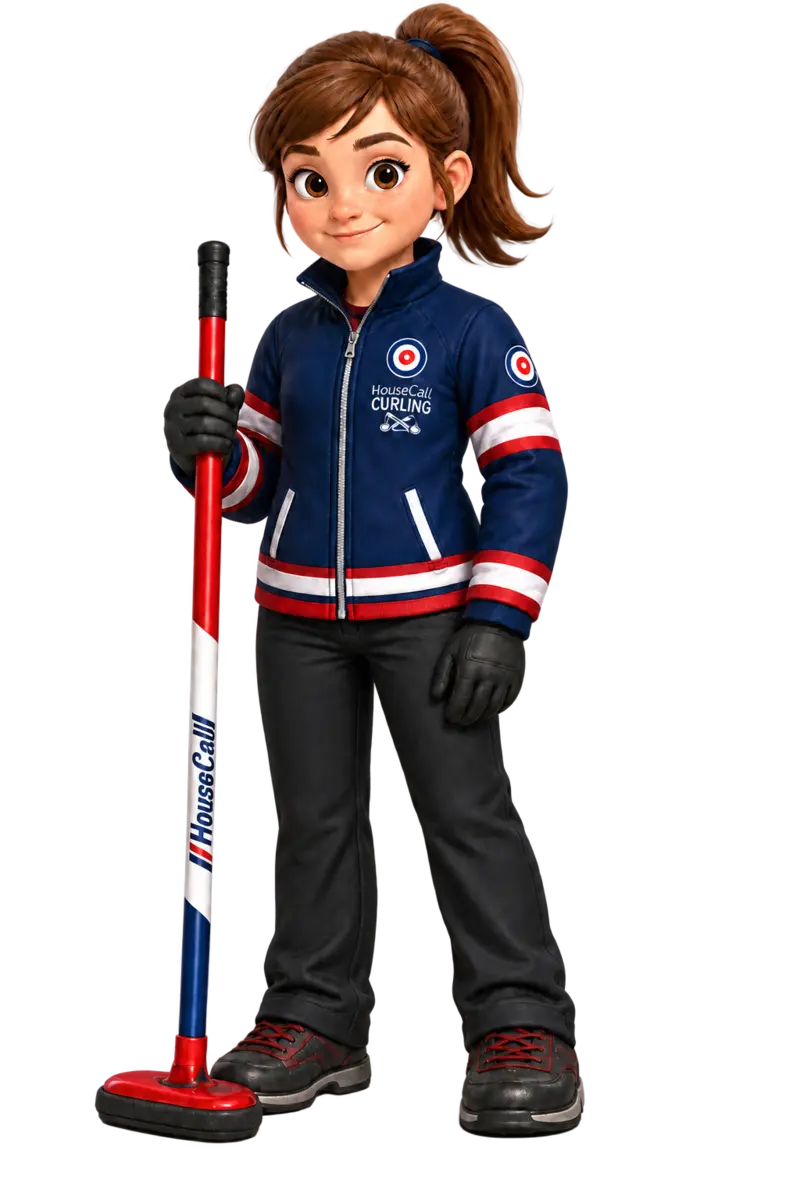
Piper, a 15-year-old HouseCall junior curler, holding her broom

Meet Piper

What is junior curling?

Junior curling can mean learning the game, making friends, playing in a junior league, practicing, going to bonspiels, or just having a good reason to be at the curling club. It does not mean you have to decide you are going to be an elite athlete when you are fifteen. Thank goodness.

“When I first started, I didn’t even like curling very much.

Then I made friends.

And I discovered curling snacks.

That helped.”

Some juniors play once a week and love it. Some start traveling to tournaments. Both count. The best first step is simply finding a welcoming place to get on the ice.

Find a club or learn-to-curl

Start with Piper
Thumbnail for Piper’s Curling Journey

Piper’s Curling Journey

Junior curling
Thumbnail for About Junior Curling

About Junior Curling

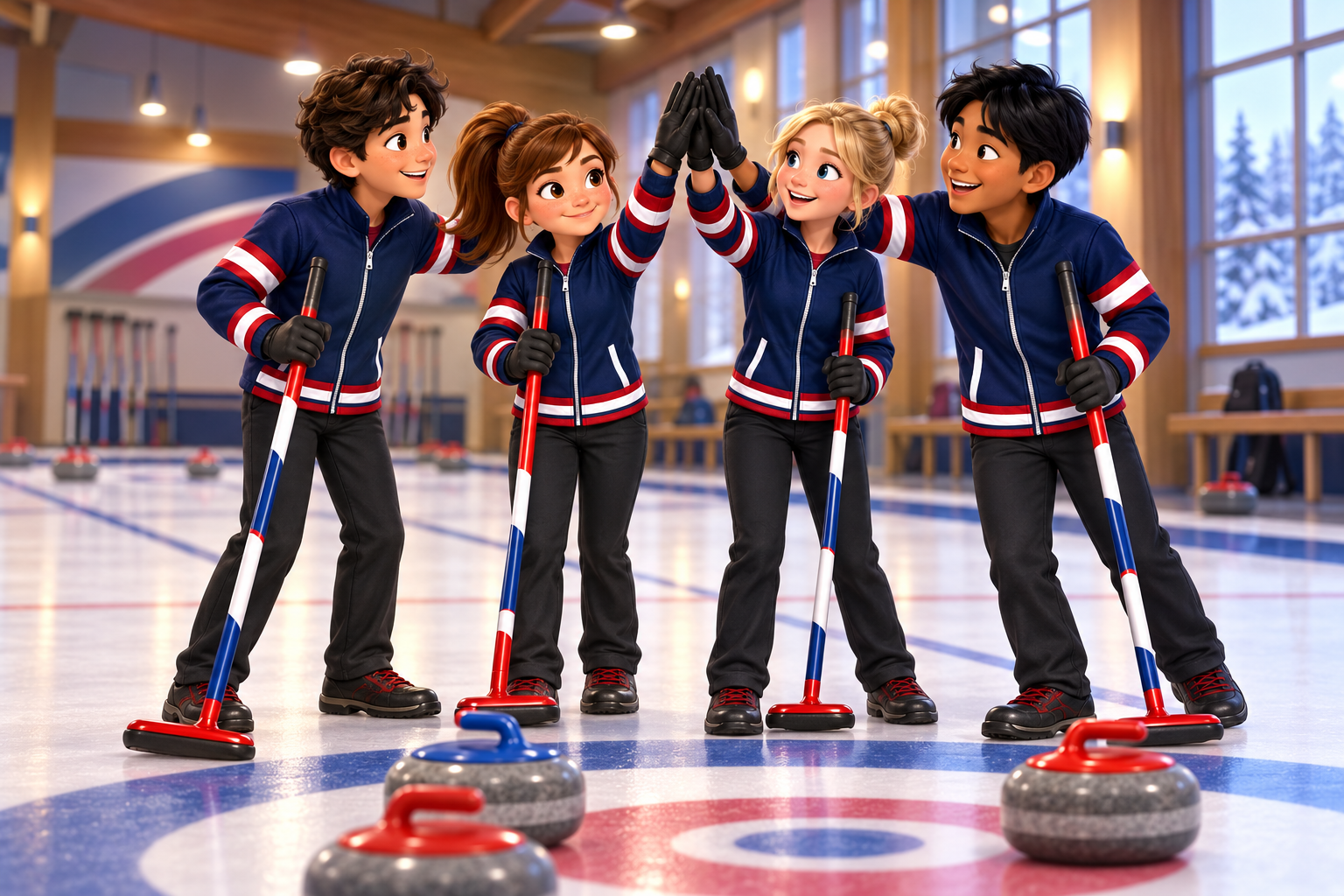
Piper sharing a high-five with her junior curling teammates on the ice
Junior curling can start with one practice, one friend, and one very good snack table.
Watch with Piper
Thumbnail for Piper on junior curling

Piper on Junior Curling

The fun part

Junior bonspiels and finding a team

You can start close to home, then decide whether you want to try more.

1

What’s a junior bonspiel?

A bonspiel is a curling tournament. Junior bonspiels can be a fun developmental weekend at your club, a trip to another club, a hotel stay, meeting new curlers, and—if you choose—more competitive events or qualifying competitions.

My official opinion: early games are much easier when someone brought muffins. Travel and sleep schedules are part of the adventure.

See USA Curling’s bonspiel calendar →

2

How do you find a team?

Teams can form through a local junior program, coaches, friends, camps, bonspiels, or junior-curling connection resources. A lot of people begin recreationally, then later decide they would like to form or join a more competitive team.

It is completely normal to ask around. Curlers are famously good at explaining things—and often pretty good at introducing people, too.

Explore Junior Curling Connection →

A possible next step

What is U18?

U18 is an important U.S. development level for teams under 18.

U18 means under 18. USA Curling’s U18 National Championships are a regional-based championship for junior boys’ and girls’ teams. Teams earn places through a regional playdown process, and the event is built to give young teams meaningful competitive experience.

It is a great bridge between learning the game and playing higher-pressure curling: you see different teams, manage a bigger event, learn how your team reacts when a shot really matters, and probably learn where the quiet corner of the club is between games.

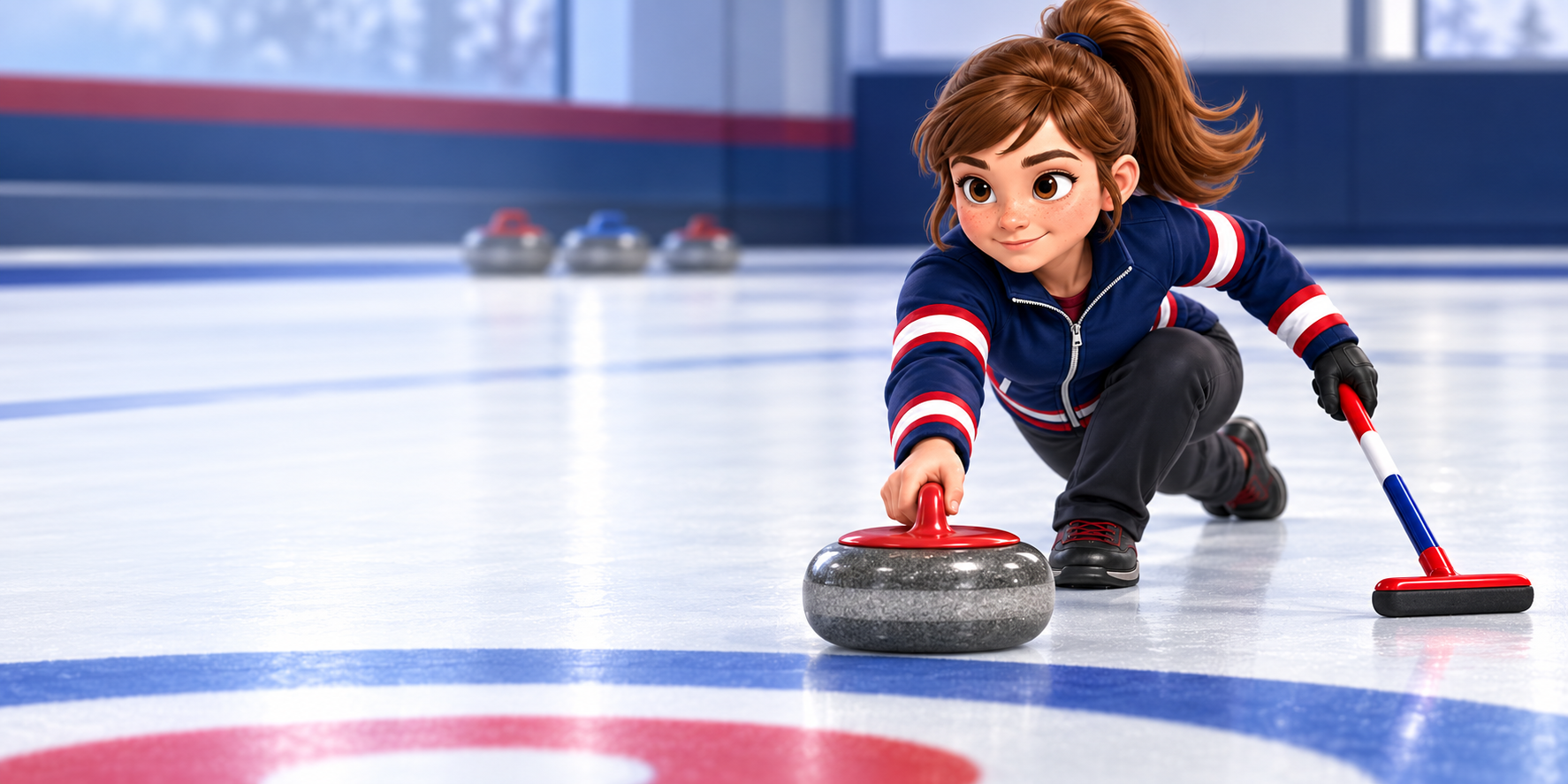
Piper making a curling delivery toward the house
Practice makes the slide feel less mysterious. Eventually.

Keep going, if you want to

What comes after U18?

You will hear U21 and Junior Nationals when people talk about older junior competition. “U21” is a common way to describe the under-21 junior level; always check the event’s current eligibility rules because they are set season by season.

USA Curling Junior Nationals determines the country’s Junior Men’s and Junior Women’s teams. The winning teams represent the United States at World Juniors, subject to that season’s international qualification route. World Curling’s World Junior Championship is for national junior women’s and men’s teams, with places connected to the previous championship and World Junior-B.

That sounds like a lot—and it is—but you do not need to know every step on day one. A good team and a good next tournament are plenty to focus on.

USA Curling Junior Nationals World Juniors

Two-player game

Junior mixed doubles

Junior mixed doubles is curling for a two-person team: one female and one male curler. It is fast, busy, and makes both people do a little bit of everything—throwing, sweeping, calling shots, and trying to remember whose water bottle is whose.

USA Curling has a Junior Mixed Doubles National Championship for curlers under 21. Its current qualification procedures list designated qualifying events, and the national champions represent the United States at the World Junior Mixed Doubles Championship.

See current Junior Mixed Doubles details →

Trying a bigger challenge

Playing up and training more seriously

Some strong juniors play against older juniors or in more advanced events. It can help you learn strategy, handle pressure, improve your delivery and sweeping, and get more tournament experience.

When a team decides to train more seriously, that might mean structured practices, strength and conditioning, delivery and sweeping drills, strategy sessions, video review, mental preparation, camps, coaching, team planning, and travel. It should still fit real life, school, and being a teenager.
My new job

Piper becomes a fifth player

I’m 15, and I was just asked to be the fifth player—sometimes people say alternate—on an U18 team. Right now, that mostly means supporting the team. I may practice and travel with them, help teammates, learn how the team works, watch games, and stay ready in case I am needed in one.

“Being the fifth player means I’m still a very important part of the team.”

I like that it gives me a chance to learn without pretending I already know everything. I get to notice how the team talks after a tough end, how they reset, and what makes them feel prepared.

Hear from Piper
Thumbnail for Piper Explains Her Role as Fifth Player

Piper Explains Her Role as Fifth Player

At higher-level events, the job can grow.

Depending on the team and event, a fifth player may throw and compare stones in practice, help match rocks that behave similarly, track changing ice, take notes, scout opponents, watch strategy, support coaches, check equipment, and stay physically and mentally ready to substitute. Exact responsibilities vary by team.

If my U18 team makes Nationals…

I might help with extra practices, throw and match rocks late at night, observe ice conditions, scout other teams, support coaches and teammates, and keep myself ready in case I am needed. That sounds like a lot, but honestly, being useful is exciting.

One route—not a requirement

The junior curling pathway

This is one possible competitive path. You can step off anywhere, stay at a stage you love, or take a totally different route. Curling does not make you sign a contract at your first practice.

LOCAL JUNIOR PROGRAM
JUNIOR LEAGUE & PRACTICE
JUNIOR BONSPIELS
FORM OR JOIN A COMPETITIVE TEAM
U18 QUALIFICATION / PLAYDOWNS
U18 NATIONALS
HIGHER JUNIOR COMPETITION
JUNIOR NATIONALS
WORLD JUNIORS
SENIOR COMPETITIVE CURLING
Watch the pathway
Thumbnail for The Competitive Curling Path

The Competitive Curling Path

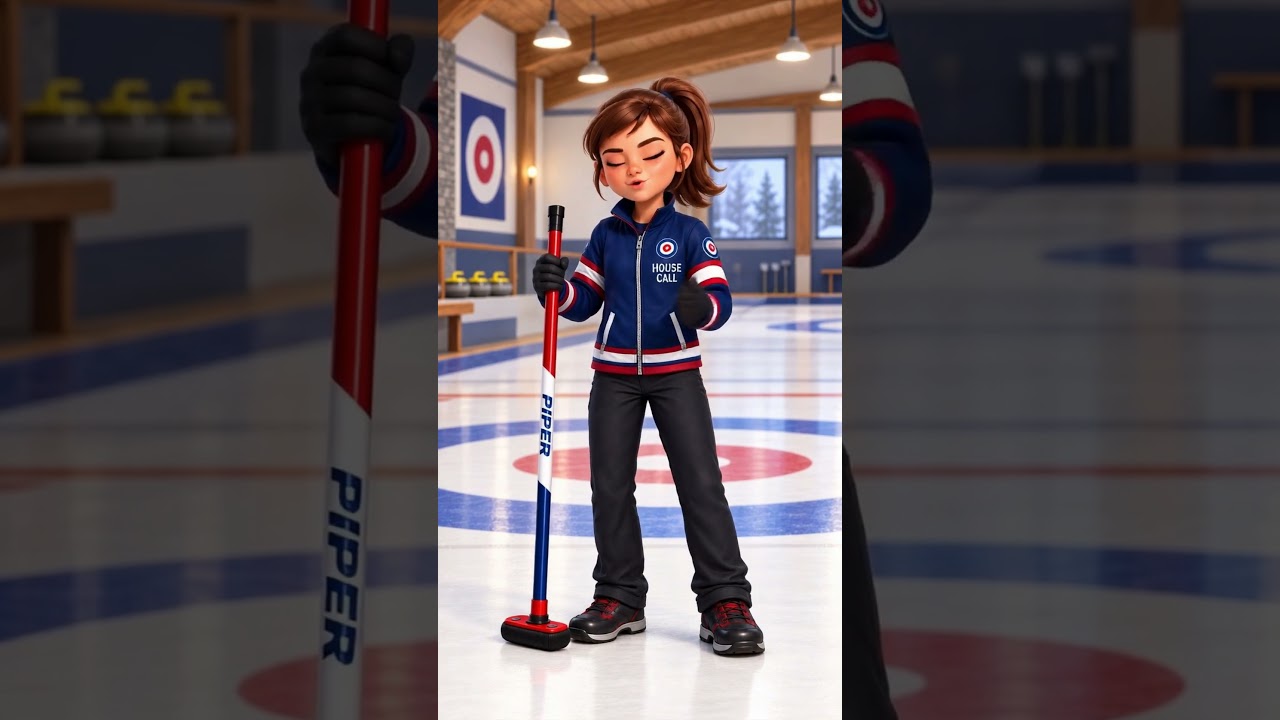
Piper smiling with her broom

From Piper

There is no rush.

“You don’t have to know how far you want to go when you start. I didn’t. Just get on the ice. You can figure out the rest later.”

Learn the curling basics Watch Piper’s First Bonspiel

Official junior-curling resources

Events, eligibility, and qualification procedures can change by season. Check the official event page before making plans.

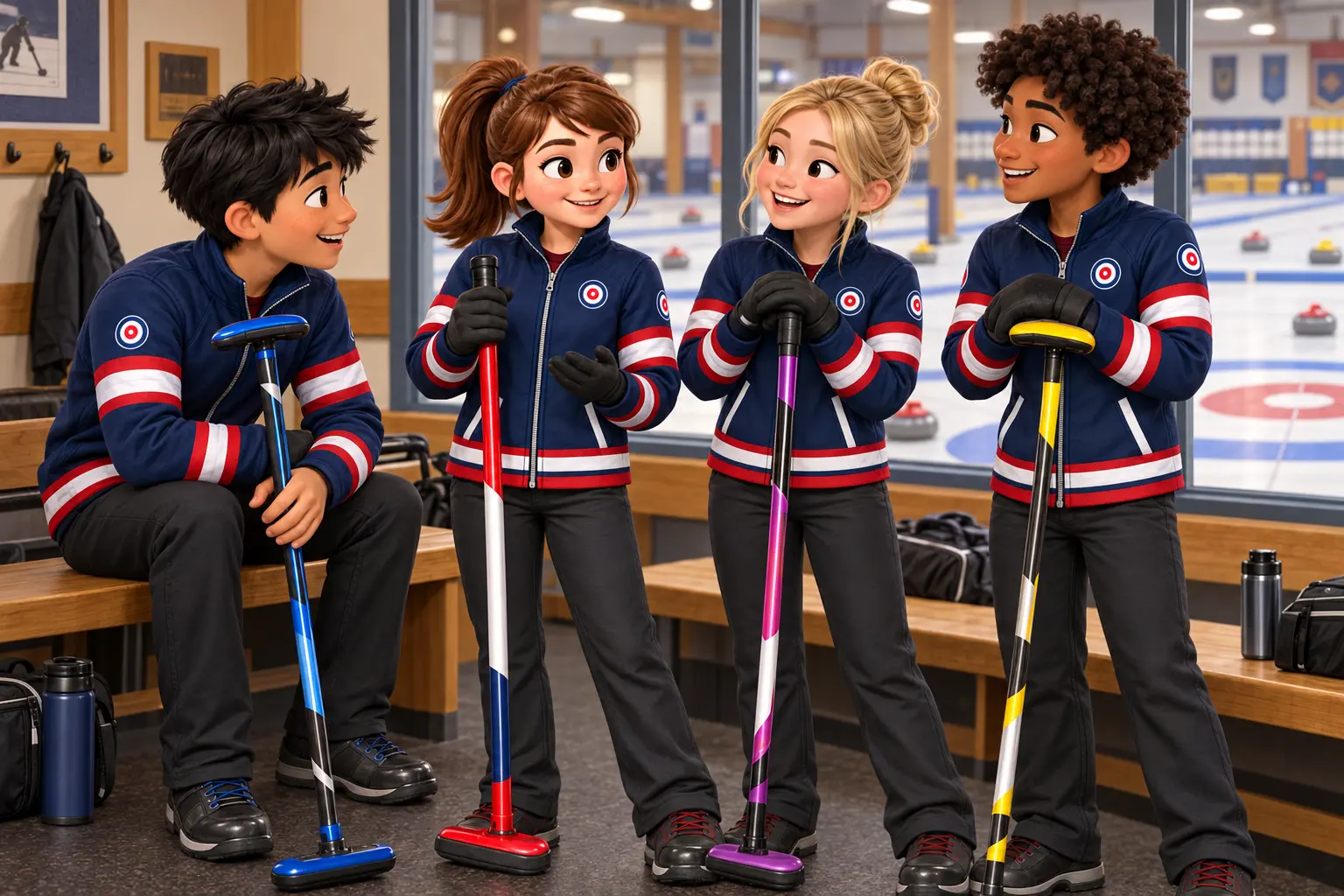
Fifteen-year-old Piper talks with three teenage junior curling teammates before practice.