This is the easiest way through HouseCall when curling is completely new. Follow the steps in order, or jump to the part you are wondering about. No homework—just the game, one friendly piece at a time.
Granite says the whole game begins with one idea: get closer to the button than the other team.
1
Learn
What is curling?
Two teams slide granite stones down a sheet of ice toward a target called the house. After all the stones are played, the team with the stone closest to the center can score.
Each lane of curling ice is a sheet. The rings at each end are the house, and the small circle in the middle is the button. The closer a stone finishes to the button, the stronger its scoring position.
Traditional curling usually has four players per team. The lead, second, third, and fourth each deliver two stones. The skip directs strategy and holds the broom as a target; the skip often throws the final two stones, but teams can arrange their throwing order differently.
Once you can follow one stone down the ice, the game starts making much more sense.
4
Learn
How a curling shot works
The team chooses a target, line, and weight. The player slides from the hack, releases the stone before the hog line, and gives the handle a gentle turn. Then the sweepers help guide how far and how straight it travels.
The ice is covered with tiny frozen droplets called pebble. As a rotating stone slows, the way it meets that pebble helps its path bend—or curl. That curved path is where the sport gets its name.
Sweeping reduces friction just in front of the stone. It helps the stone lose speed more slowly, travel farther, and usually stay straighter. Calls such as “hard,” “hurry,” “clean,” and “off” tell sweepers what the shot needs.
You do not need to predict every shot. Start by noticing who is closest, who throws last, and what each team is trying to protect.
7
Learn
How scoring and ends work
An end is one round of play. When every stone has been delivered, only one team can score. It gets one point for every stone closer to the button than the opponent’s closest stone. Then play heads back toward the other house.
The hammer means the final stone of the end. Throwing last gives a team one final chance to change the score. In traditional team curling, a team may even blank an end—score zero—to keep hammer for the next one.
A draw is meant to stop in a useful place. A guard stops in front of the house to protect something behind it. A takeout removes or moves another stone. Those three ideas unlock most beginner strategy.
Curling is a changing puzzle. Teams place guards, hide draws behind them, clear danger with takeouts, and think about what the house might look like several shots later. You only need to ask: “What is this shot trying to set up?”
Curling has official rules, but it also has a strong tradition of honesty, welcome, and taking care of one another.
11
Learn
The essential beginner rules
Release the stone before the near hog line, and make sure it fully crosses the far hog line. During the first five delivered stones, certain guards in the free guard zone cannot be removed by the other team. If you touch a moving stone, call it right away.
Shake hands, stay still during deliveries, protect the ice, compliment good shots, and call your own violations. Curlers compete hard while treating opponents and teammates with respect.
A curling club is part rink, part classroom, and part gathering place. Volunteers make the ice, run events, welcome beginners, and keep the club going. After games, both teams often sit together and talk—a tradition called broomstacking.
You do not need a team, curling shoes, or your own broom to begin. Many clubs lend equipment and run Learn to Curl sessions before beginner leagues. Wear clean shoes and warm, stretchy layers, then let the club show you the rest.
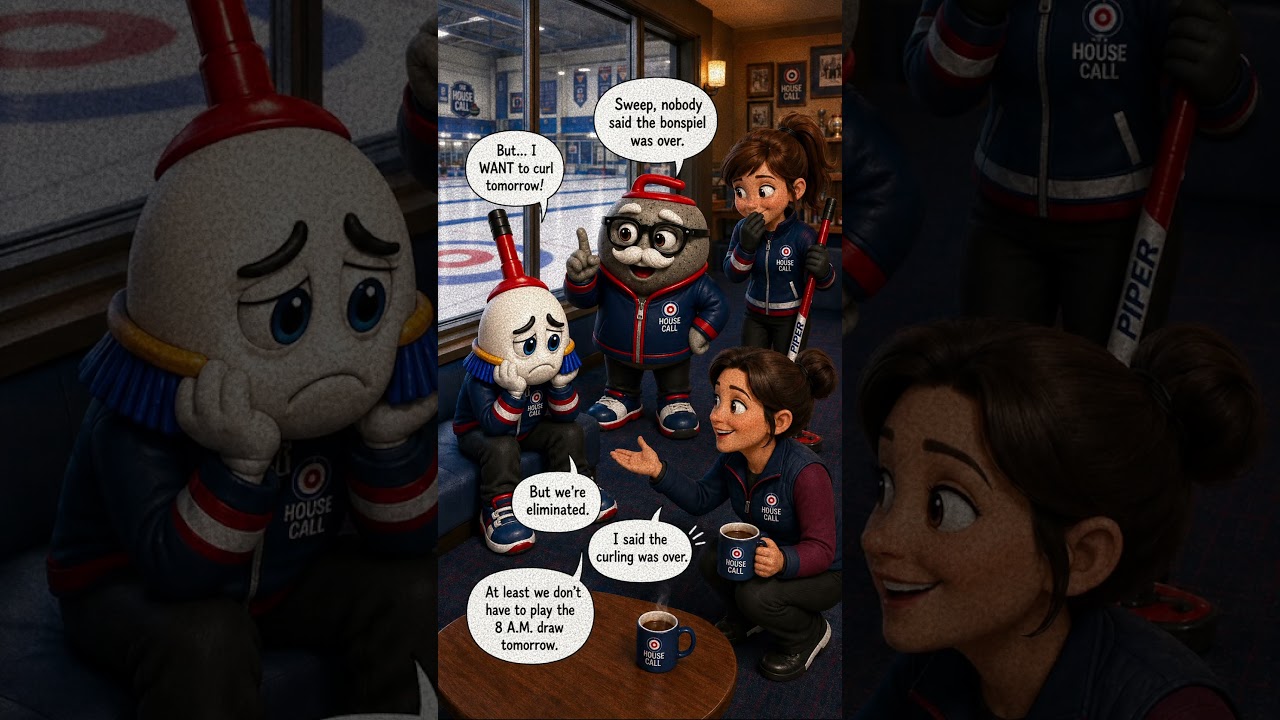
A bonspiel is a curling tournament, but the games are only part of it. Teams travel, share meals, meet other curlers, volunteer, laugh, and spend a lot of time together around the club.
Follow a game, then choose what interests you next
Once the basics click, you can explore different formats, bigger competitions, and deeper strategy in any order.
16
Learn
How to watch and understand a game
Start with the stone being delivered. Notice where the skip wants it to finish, whether the sweepers are working, which team is closest to the button, and who has hammer. You do not have to understand every angle to enjoy the end.
You know enough to follow the game now. Mixed doubles moves faster with two players. Advanced strategy goes deeper into angles and game situations. Championships, Grand Slams, and Olympic curling show the sport at its highest levels.